OCDS References

OCDS references

Data Mining of Philippine Governance Using Budget Allocation and FOI Records

Athens, Greece | September 23–25, 2026 — Bicol University, in collaboration with Layertech Labs, presented a joint research paper entitled “Data Mining of Philippine Governance Using Budget Allocation and FOI Records” at the 6th International Conference on Novel & Intelligent Digital Systems (NiDS 2026), held in Athens, Greece, from September 23 to 25, 2026.

Overview

How are public resources distributed across the country, how accessible is government information, and what issues dominate public discussions about governance?

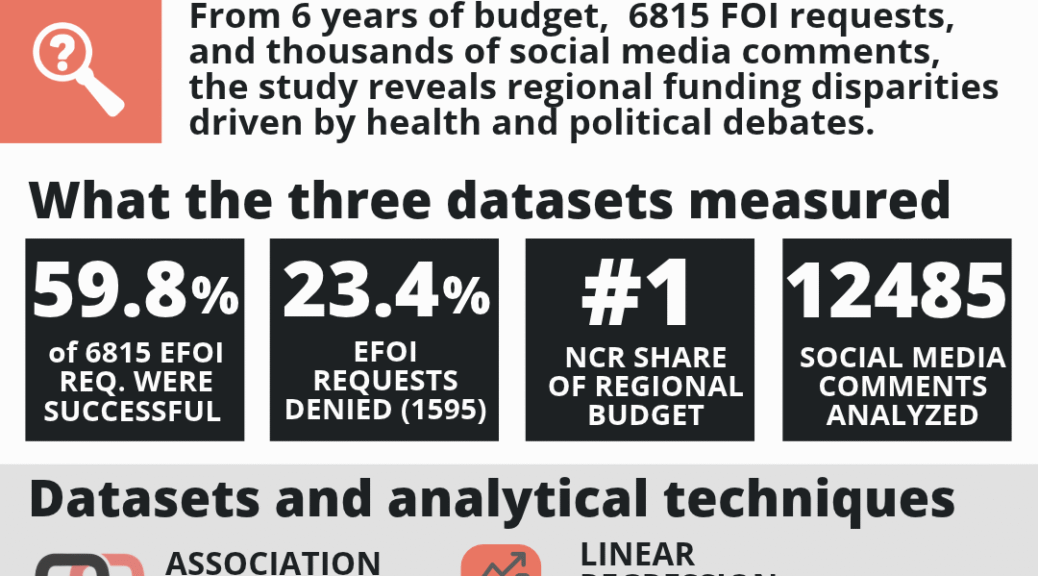
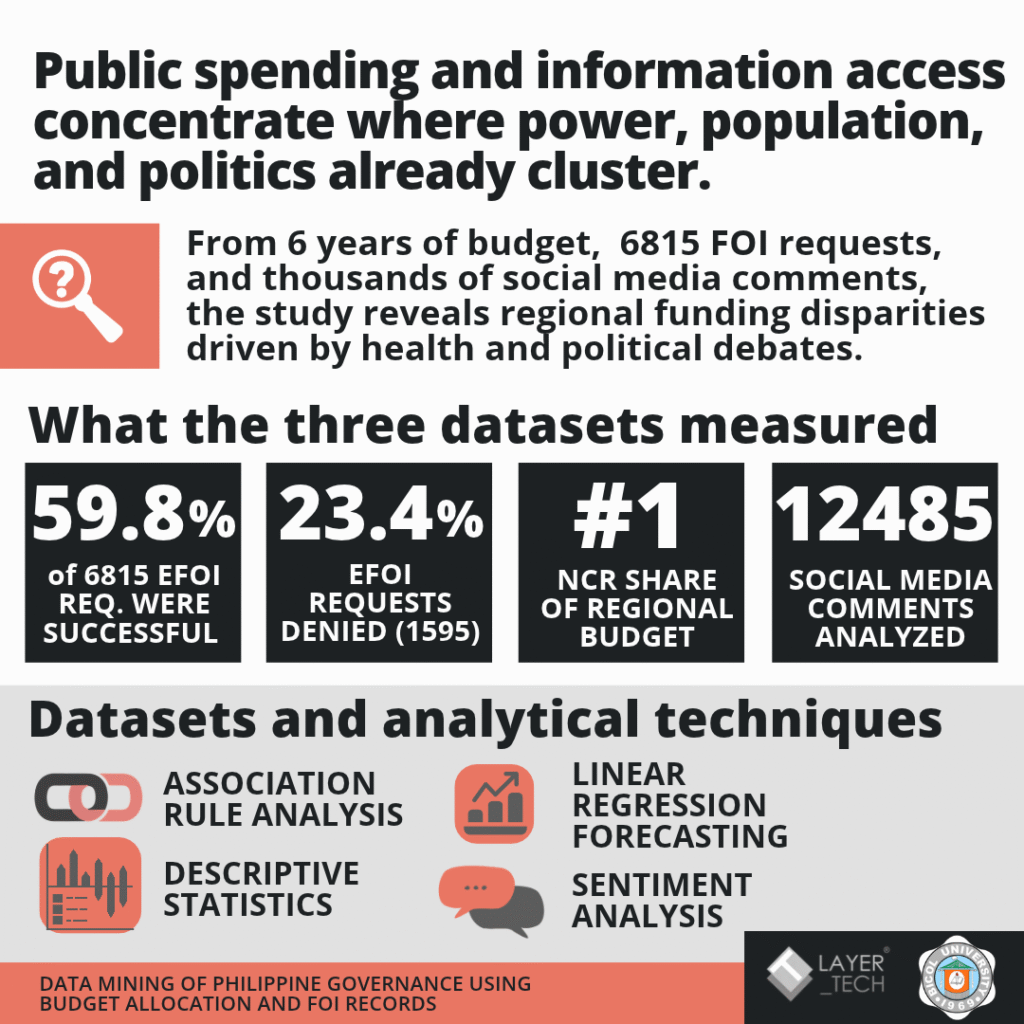
A collaborative study by Bicol University and Layertech Labs examines these questions through the analysis of three public datasets covering different aspects of Philippine governance. The research brings together six years of General Appropriations Act (GAA) budget allocations, 6,815 electronic Freedom of Information (eFOI) transactions, and 12,485 multilingual social media comments.

Using data mining, statistical analysis, and natural language processing (NLP), the study examines regional spending patterns, differences in FOI request outcomes across government agencies, and the topics and sentiments expressed in online discussions.

Key Findings

The analysis revealed several patterns across the three datasets, offering a closer look at how government spending, information access, and public discourse are reflected in available data.

1. Regional Spending and GAA Budget Trends

  • Concentration of Public Spending: Association rule analysis identified recurring relationships between high-value government transactions, the Department of Public Works and Highways (DPWH), and Capital Outlays. These patterns point to the significant role of infrastructure-related spending in the analyzed budget records, including allocations associated with the Build Better More agenda.
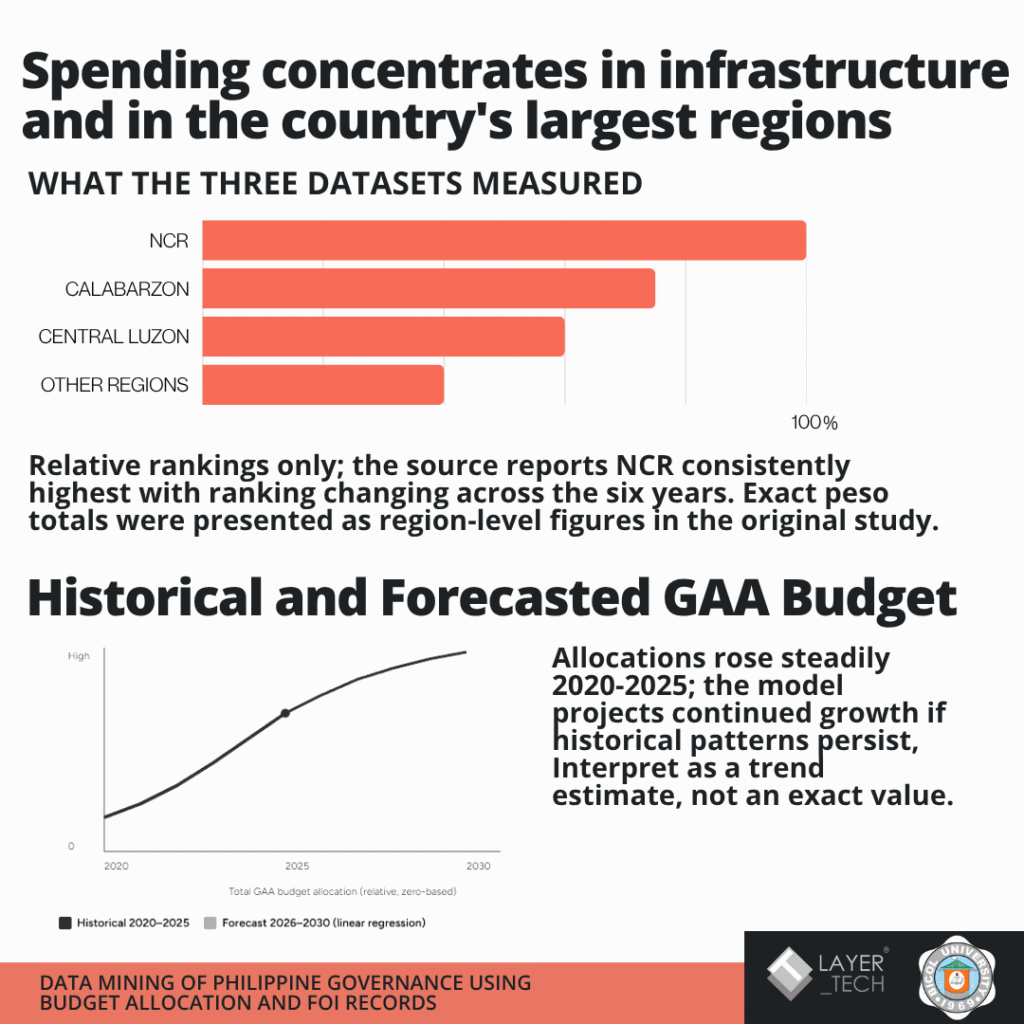
  • Regional Disparities: Budget allocations were concentrated in the country’s largest economic and administrative regions. The National Capital Region (NCR) consistently ranked highest, followed by CALABARZON and Central Luzon, although the rankings varied across the six-year period.
  • Projected Budget Growth: Historical GAA allocations from 2020 to 2025 showed an upward trend. A linear regression model was used to project allocations through 2030, indicating continued growth if historical patterns persist. These projections represent estimated trends rather than confirmed future budget figures.

2. The eFOI Transparency Landscape

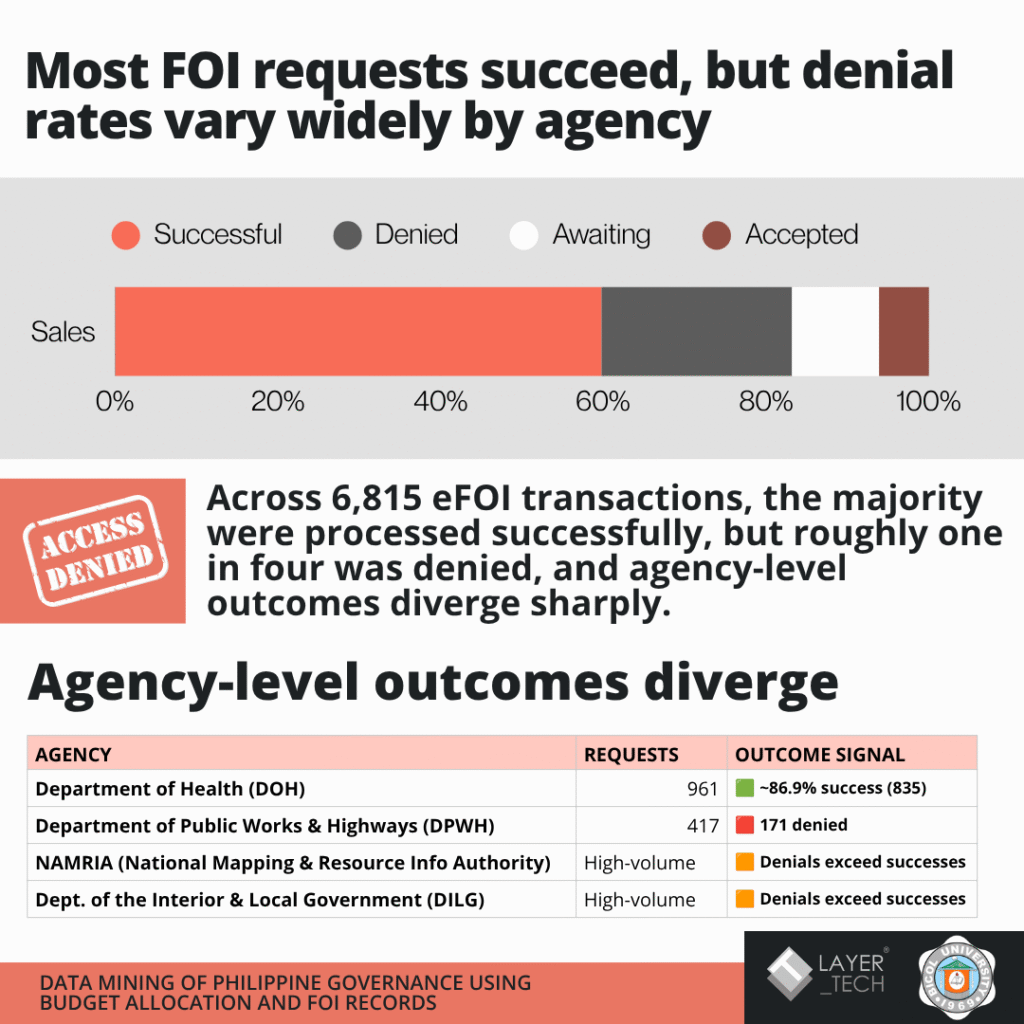
  • Overall Request Outcomes: Of the 6,815 recorded eFOI transactions, 59.77% were successfully processed, while 23.40% were denied. The remaining transactions were classified as pending or acknowledged.
  • Differences Across Agencies: FOI outcomes varied considerably among government institutions. The Department of Health (DOH) recorded the highest transaction volume, with 961 requests and an 86.9% success rate. Meanwhile, the Department of Public Works and Highways (DPWH) recorded 171 denied requests. NAMRIA and the Department of the Interior and Local Government (DILG) also had denial counts exceeding their successful issuances.

These differences highlight the need to examine how agencies handle information requests, particularly in relation to their respective disclosure procedures, administrative requirements, and record-management practices.

3. Public Sentiment and Online Discourse

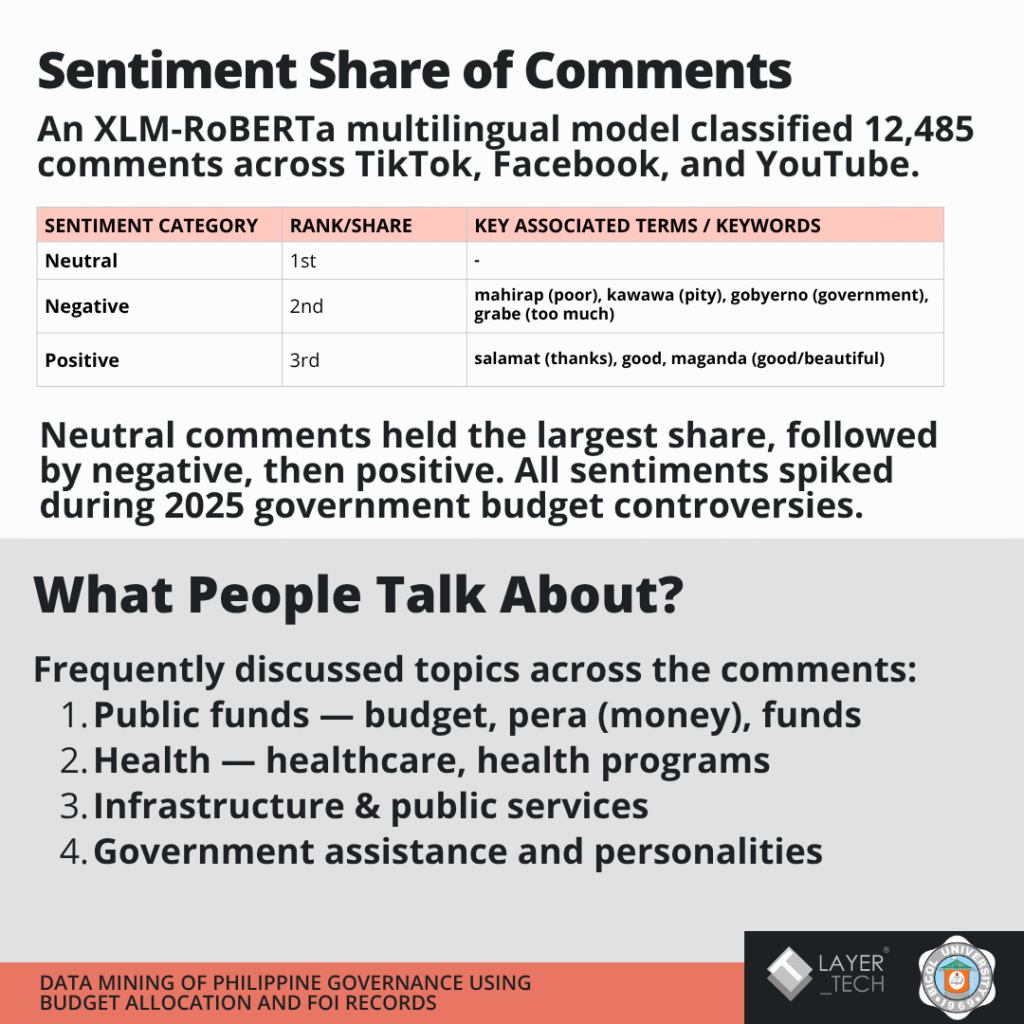
  • Sentiment Distribution: Researchers used the CardiffNLP XLM-RoBERTa multilingual model to classify 12,485 comments gathered from TikTok, Facebook, and YouTube. Neutral comments accounted for the largest share, followed by negative and positive sentiments.
  • Increased Public Discussion: Comment activity across the analyzed platforms increased during major government budget controversies in 2025, including congressional budget reviews and discussions surrounding public health reserve fund transfers. The findings show how these events coincided with increased online engagement.
  • Topics in Public Discussion: Topic modeling and keyword analysis identified public funds, healthcare, infrastructure, and government assistance among the frequently discussed subjects. References to political figures and government agencies also appeared in the discussions, suggesting that citizens often associate broader governance issues with the officials and institutions involved.

Recommendations Based on the Findings

The study provides a descriptive account of patterns found in public budget records, FOI transactions, and social media discussions. Rather than serving as a performance audit of government agencies, its findings offer a basis for further examination and practical improvements.

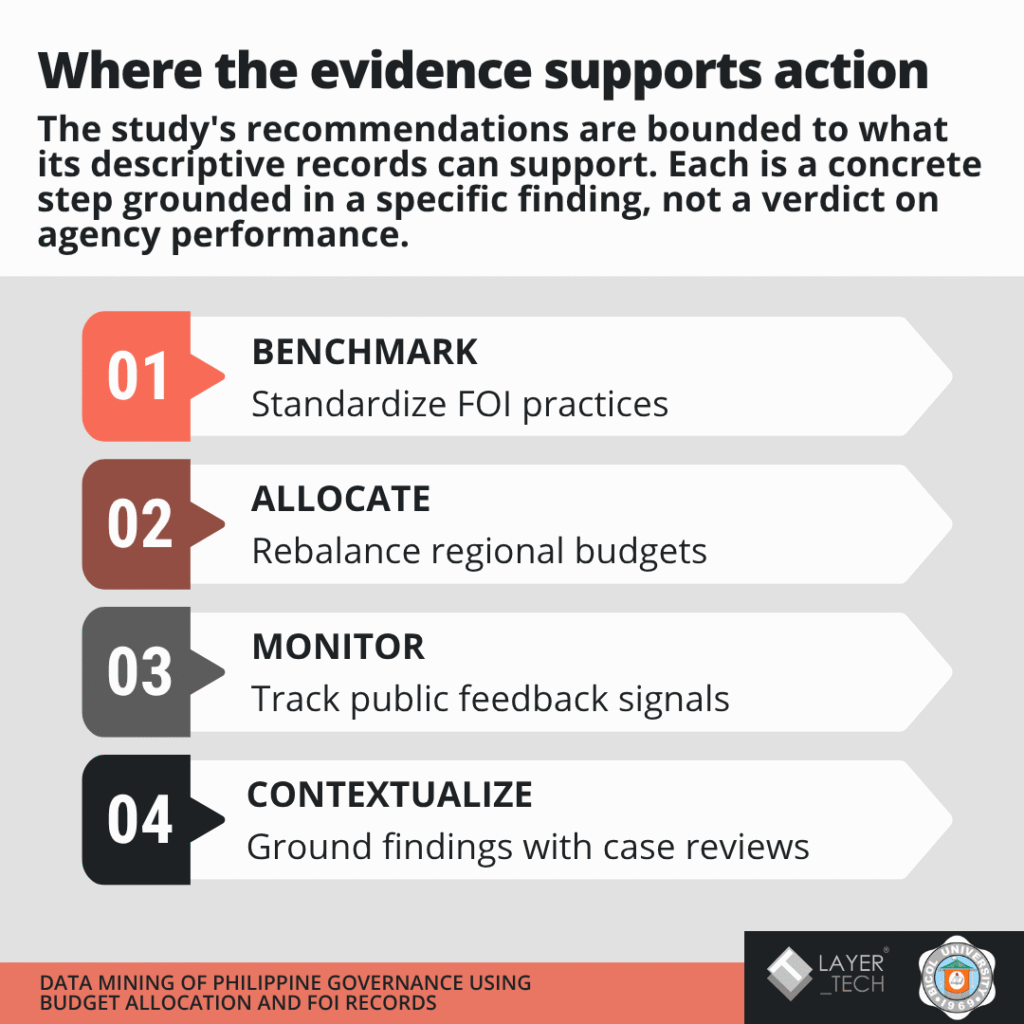
The researchers identify four areas where the results can inform future action:

  1. Benchmark and Standardize FOI Practices: Agencies with higher FOI success rates can serve as references for reviewing existing procedures and identifying practices that may help streamline information requests across government institutions.
  2. Review Regional Budget Allocations: The concentration of funding in major regions provides a basis for examining how allocation frameworks address infrastructure and public service needs in other parts of the country.
  3. Monitor Public Feedback: Natural language processing and sentiment analysis can help track recurring public concerns and changes in online discussions surrounding government programs and policies.
  4. Complement Data Analysis with Case Reviews: Quantitative findings should be examined alongside individual agency cases and qualitative reviews to better understand the administrative and legal circumstances behind the observed results.

Explore the Infographics
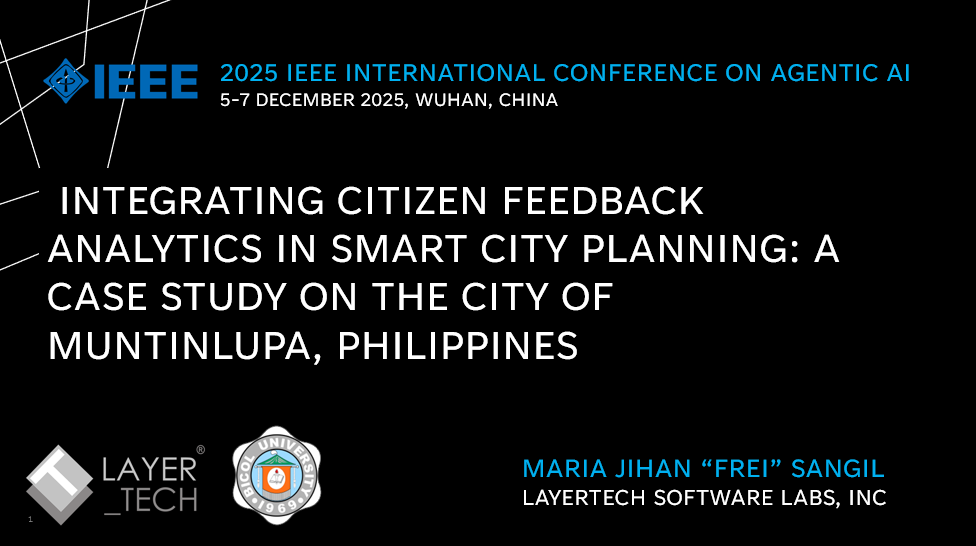
Integrating Citizen Feedback Analytics in Smart City Planning: A Case Study on the City of Muntinlupa, Philippines

Wuhan, China | December 5–7, 2025 — Bicol University, in collaboration with Layertech Labs, showcased a joint research paper entitled “Integrating Citizen Feedback Analytics in Smart City Planning: A Case Study on the City of Muntinlupa, Philippines” at the 2025 International Conference on Agentic AI (ICA2025) held in Wuhan, China from December 5 to 7, 2025.

The paper highlights an innovative, data-driven approach to smart city planning by leveraging citizen feedback analytics to inform local government decision-making. Using the City of Muntinlupa as a case study, the research demonstrates how structured analysis of citizen feedback—collected through digital platforms and engagement mechanisms—can enhance urban planning, service delivery, and participatory governance. The study demonstrated the potential for machine learning methods and automation, to feasibly integrate citizen feedback data into a Local Government’s core decision support system.

Paper Abstract:

Smart City development has become a central agenda of the Association of Southeast Asian Nations (ASEAN) in promoting sustainable urban growth. However, many smart city initiatives in the region remain technology-centric, which often neglect inclusivity and human rights integration. There is, therefore, a growing need to explore models that embed citizen participation and feedback at the core of smart city design. In an attempt to address this gap, this paper examined the case of Muntinlupa City, Philippines, and its participation in the Digital Democracy Project, an initiative that uses citizen feedback data to inform smart city planning through stakeholder engagement. Using a co-created digital survey distributed via local government and partner networks, the project gathered public input on key smart city issues. Responses underwent pre-processing to remove unreliable entries and were followed by both quantitative and qualitative analyses, which included sentiment profiling and keyword clustering. The results revealed strong support for smart city development, especially among youth and digitally active barangays. The Muntinlupa City Planning and Development Office acknowledged that the feedback not only reflected existing implementation issues but also helped refine strategic priorities for resource allocation and program design. The Muntinlupa experience illustrated how agile ICT-based feedback mechanisms that are transparently implemented into local planning can bridge existing governance gaps and strengthen participatory urban development.

The paper is available for download (upon request) on ResearchGate: https://www.researchgate.net/publication/399488616_Integrating_Citizen_Feedback_Analytics_in_Smart_City_Planning_A_Case_Study_on_the_City_of_Muntinlupa_Philippines

Public Data Analytics: Community Problem Solving

VOLUME 2 of the OCDex Public Data Analytics Series

Data science and analytics has demonstrated its power in informing decision-making and problem-solving. Data can reveal trends and insights that would have otherwise been obscured. It can give decision-makers key information needed to craft effective and optimal solutions to organizational problems. It can help predict potential bottlenecks and challenges, so that organizations may come prepared when it happens. Data science and analytics is a sought out
skill in the digital age.

The Covid-19 pandemic and its resulting limitations on mobility has forced many transactions and communications to migrate from the physical space to the digital space. This sudden global digitalization resulted in an increase in data produced and a subsequent increase in the potential game-changing insights that these data may be hiding.


While many in the private sector have been seen leveraging the power of data for business insights and maximization of revenue, the public sector is yet to catch up in terms of digitalization and data utilization, especially in developing countries. The power of data would especially help communities and local governments in coming up with efficient, effective, and inclusive policies and solutions to problems.


The aim of the 2022 OCDex project run is to bring data scientists and analysts together, and demonstrate how analysis of government data can be used to help solve problems in local communities. The project aims to demonstrate how it can help inform local policymaking and project planning, and how citizens and researchers can participate and help their respective local government units in overcoming community challenges hand-in-hand. This handbook hopes to convince local governments and authorities to invest in good data housekeeping and integrate data science and analytics into their decision-making.


This handbook features how academics and data enthusiasts used public data to help inform solutions to various community problems such as healthcare, inclusivity, and accessibility for persons with disabilities, fairness, and transparency in public procurement, and ensuring enough supply of utilities. Lastly, this handbook presents a replicable model of cooperation between local governments and their local researchers and data enthusiasts toward the effective use of data science and analytics for community building.

Loader Loading…
EAD Logo Taking too long?

Reload Reload document
| Open Open in new tab

For more information, questions, suggestions, and submissions, please e-mail learning@layertechlab.com

Reflections: Policymakers and informed decision-making

Author: Pee Jay N. Gealone (Bicol University)

Culturally, Philippines has been reliant to tradition in many of our practices and behavior. These traditions play vital role in how we see our world, sometimes however, these traditions are the ones that hold us back. In the advent of information technology and new technologies in general, the decision-makers are struggling how to push forward reforms that are often in contrast to the perceived norms and tradition. This is more true in a local government than in the national government because they are closer to the people. With the proper use of data, the policy makers will be able to tailor fit policies that are needed and supported by the general public.

The LGU may institutionalize the use of data to determine the right policies to be implemented in their localities. By passing resolution that institutionalizes these practices, there will be a creation of system where local policy makers can have the tool to push through programs and policies that may be in conflict with the perceived traditions and norms. I am convinced that it is now the time to bring down data-driven policies to the local level.

This article is the author’s reflection on the insight gained from the recently concluded OCDex 2022 Public Data Analytics Fellowship Trainings.

For more information about the article, please reach out to the author: pjngealone@bicol-u.edu.ph or Layertech labs support at learning@layertechlab.com

Reflections: How the Academe can Leverage Data and Analytics to Help LGUs

Author: Mia Amor C. Tinam-isan (Mindanao State University – Iligan Institute of Technology)

Data analytics has been the talk of the town. It finds its way across agencies (government or private), businesses, or various institutions in discovering valuable information about the existing and overwhelming amount of data. Data in these times exponentially increase and extracting valuable information from these data is essential. Information from the analysis can be used for decision making, coming up with a good marketing strategy, or even in establishing policies and guidelines from a broad test base. However, local government units per se in various parts of the Philippines, have not yet maximized the impact of data analytics. Varying factors might contribute to this such as unorganized data and non-computerized processes.

As part of the academic community, we can implement programs, webinars, and workshops that will empower our LGU to exploit their available data. It is imperative to partner with NGAs, and LGUs, and develop a working strategy for local government digitization. We can propose a simple initiative and start from the automation of LGU processes to organize and ensure the quality and the integrity of data for analysis. We can also venture into partnering with private agencies such as OCDex which has experienced in partnering with LGUs and had already developed numerous government data analytics applications. As of the moment, the College is continuously having a dialog with different offices of LGU-Iligan in crafting MOA for the digitization of the city government.

This article is the author’s reflection on the insight gained from the recently concluded OCDex 2022 Public Data Analytics Fellowship Trainings.

For more information about the article, please reach out to the author: miaamor.catindig@g.msuiit.edu.ph or Layertech labs support at learning@layertechlab.com

Educated Spending: An Insight on SUCs Utilization of MOOE

Author: Sittie NB Pasandalanb (Mindanao State University – Iligan Institute of Technology)

Despite the reality of reduced budgets of the education sector especially of state universities and colleges (SUCs), institutions of learning have a good share of the annual National Expenditure Plan of the government. Generally, appropriations of SUCs can be categorized into three: Personnel Services (PS), Capital Outlay (CO), and Maintenance and Other Operating Expenses (MOOE). Of these three categories, the MOOE should be of great interest as this gives insight to how a higher education institution (HEI) of the government utilizes government funds, ergo tax payers’ money.

MOOE is funds to be used for necessities (such as electricity and water) and for activities. HEIs are institutions expected to promote conservation of energy, it is worthy to look into the electricity and water bills of HEIs as these would speak of how HEIs are walking the talk. As employees of HEIs are taxpayers themselves, spending for activities should be examined to determine judiciousness in utilizing government funds, ergo taxpayers’ money. 

There is the disconnect between spending from one’s own pocket to spending from another’s pocket. Most likely, one finds it easier to spend from another’s pocket than one’s own. This begs the question of whether employees in HEIs (taxpayers in HEIs) can connect with the funds allocated to HEIs as taxes they have paid to the government, ergo their money. 

In the case of MSU-IIT, the MOOE for 2021 amounted to Php 297,321,732.24 (from Php 222,402,237.68 in 2020). The question on how the amount was utilized and if the expenses are necessities or mere expenditures to utilize funds allocated by the government begs to be answered. 

This article is a reflection on the OCDex 2022 Fellowship Programme for Researchers

For more information about the article, please reach out to the author: sittie.pasandalan@g.msuiit.edu.ph or Layertech labs support at learning@layertechlab.com

Reflections: Using Data Analytics to Validate Philippines’ occupational gender segregation

Author: Christian Sy (Bicol University)

The World Economic Forum’s Global Gender Gap Report of 2021 recognized the Philippines as the best-performing country in Asia in terms of gender equality. It ranked 1st in Asia and 17th out of the 156 countries. The Global Gender Gap Index (GGGI) is a significant indicator of gender disparity worldwide. It is useful for tracking the extent of access to resources and opportunities and differences between men and women. It adopts four key dimensions that include 1. Economic Participation and Opportunity, 2. Educational Attainment, 3. Health and Survival, and 4. Political Empowerment.

The Philippines have almost closed the gender gap for educational attainment and health and survival gaps with an index score of 0.999 and 0.979, respectively out of the perfect score of 1. On the other hand, economic participation and opportunity, and political empowerment are trailing with 0.792 and 0.353 index scores. This is primarily because of the gender gap in employment opportunities for women, and statistically, there are too few seats in government-held for women.

With this, we can explore a textual analysis of multi-domain, multi-source, and multi-year articles through big data analytics to validate the Philippines’ occupational gender segregation along with the economic participation and opportunity dimension of the Global Gender Gap Index (GGGI). The result of this textual analysis may be utilized to improve institutional transformation and policy formulation for equalizing economic participation and opportunity for women.

References

[1]        M A R C H 2 0 2 1 Global Gender Gap Report The analysis presented in the Global Gender Gap Report 2021. 2021. [Online]. Available: http://reports.weforum.org/global-

[2]        R. R. Sharma, S. Chawla, C. M. Karam, “Chapter 10: Global Gender Gap Index: World Economic Forum Perspective”, 2021, DOI:88975728.00017.

[3]        T. Mehdi, “Global Gender Gap Index: A Stochastic Dominance Approach,” SSRN Electronic Journal, Sep. 2020, doi: 10.2139/ssrn.3663281.

[4]        R. E. Matland, “Women’s Representation in National Legislatures: Developed and Developing Countries,” Legislative Studies Quarterly, vol. 23, no. 1, p. 109, Feb. 1998, doi: 10.2307/440217.

[5]        C. L. Hoyt, “Women, Men, and Leadership: Exploring the Gender Gap at the Top,” Social and Personality Psychology Compass, vol. 4, no. 7, pp. 484–498, Jul. 2010, doi: 10.1111/j.1751-9004.2010.00274.x.

This article is a reflection on the OCDex 2022 Fellowship Programme for Researchers

For more information about the article, please reach out to the author: cysy@bicol-u.edu.ph or layertech labs support at learning@layertechlab.com

Predicting Public Procurement Irregularities in the COVID-19 Response of Local Government Units (LGUs) in the Philippines

Authors: Barajas, J.R., Aspra, N., Gealone, P.J., Lucero, A., Padua, O., Ramos, M.

Motivated by ensuring transparency, fairness, and efficiency in public procurement at the time of the COVID-19 pandemic, a team of engineers and faculty from Bicol Region (Region 5) in the Philippines collected, digitized, and analyzed public procurement data to inform the COVID-19 response of select Local Governments in the country.

Highlights of the Report:

• On average, only 2 out of 10 LGU contracts have been awarded in
2020.

• For every Php1 spent, approximately Php1 remains unspent in
the procurement of goods and services made by LGUs.

• A total of Php481 billion were distributed across all LGUs in the country
for 2020 but only 10% of this budget was allocated for the procurement
of drugs and medicines. 40% of this budget went to construction
projects.

• Excluding LGU contracts not posted in the PhilGEPS website, only Php10
billion (2.16% of the total LGU budget) was allocated for COVID-
19 related contracts.

• An equivalent amount of Php720 million was potentially lost from 786
LGU contracts flagged as irregular.

• Audit findings for LGUs were primarily centered on directing accountable
officers to comply to documentary requirements mandated by existing
circulars, memorandums, and Philippine laws.

• A logistic regression model with an accuracy of 91.29% was developed
to identify contracts that are potentially irregular.

Short Summary of the Report:

From examination of 296,220 local government unit contracts, this project was able to develop a logistic regression model capable of predicting potentially irregular LGU contracts posted on the PhilGEPS website for the fiscal year 2020 at an accuracy of 91.29%. Validation of the model using metrics derived from the confusion matrix revealed that the developed model had a recall score of 1.0 and a precision score of 0.029. While the precision of the model may be
low, the high recall score is deemed more important in this use-case since it would be more costly for an LGU to miss out on irregular contracts. Overall, the developed prediction model is seen to be highly beneficial as a decision
support tool for LGUs since this could potentially narrow down the number of awarded LGU contracts to be legally reviewed resulting in a faster turnover of review cycles conducted within a given fiscal year.

The team’s collected datasets are available for download in the OCDex open data portal, attribution to the authors and contributors is required for use.

DOWNLOAD FULL REPORT HERE:

Loader Loading…
EAD Logo Taking too long?

Reload Reload document
| Open Open in new tab

Are you interested in this report? Do reach out to us at learning@layertechlab.com so that we can directly connect you with the authors, as well as the documentations they submitted.

Using Government Procurement Data to Influence Bidding Strategy of Local Contractors

Using Philippine Government E-Procurement System (PhilGEPS) data of 19 local government units from years 2016-2018, four out of six key information requirements of local contractors and bidders were answered. Reducing the cost of acquiring information led to increase in bidding confidence, and a more concrete bidding and logistics strategy.

The paper was presented in the 2020 International Symposium on Technology and Society, hosted by the University of Arizona, Tempe, AZ, USA.

This paper explores how open government data can be used to influence suppliers and contractors to participate in public bidding, by minimizing the cost of information acquisition that influence bidding decision and strategy. The researcher conducted data scraping, pre-processing, and exploratory techniques on official procurement data of nineteen (19) Local Government Units (LGUs) in Albay, Philippines, and triangulated results with local government actors, contractors, and businessmen.

The study showed that the existing procurement data mandated by the Philippine procurement law to be released can answer 4 out of 6 key information requirements of bidders, thereby increasing overall bidding confidence. Using dashboards that regularly collate, preprocess, process, and visualize these data can help local procurement competitivenes.

For more information, the paper’s DOI is: 10.1109/ISTAS50296.2020.9462199

Automated Process Mining in Philippine Procurement Event Logs – Automated Process Flow Detection

“Process mining applies data science to discover, validate and improve workflows . By combining data mining and process analytics, organizations can mine log data from their information systems to understand the performance of their processes, revealing bottlenecks and other areas of improvement. “

(IBM, 2021).

A relatively new technology, process mining, is getting more and more popular due to increases and improvements in data production and management, and cloud technology. Companies and organization that use process mining can “see” the “current state” of their process workflow, and rapidly evaluate compliance to the “target” flows.

“Companies that adopt an incremental improvement approach, on the other hand, tend to spend too much time on analyzing the “as-is.” In addition, their current process analysis is frequently based on interviews and sticky notes, which executives sometimes regard as overly subjective and treat with justifiable skepticism. “

(Davenport and Spanyi, 2019)

Public procurement is a business process that is prone to corruption and administrative inefficiency, affecting the quality of service delivery to the public.  Using state university’s three-year procurement data as a sample, a paper published and presented by Layertech Labs in the 7th International Conference on Behavioural and Social Computing (BESC) – Bournemouth, United Kingdom, explores the use of process mining on publicly available procurement data to discover the underlying structure of procurement processes of government entities in the Philippines, check for conformance with the prescribed process in the procurement law, and identify potentially problematic nodes. 

In the paper, event logs were generated from official public procurement data and mined with heuristics-based process mining algorithm, using free, open-sourced tools. The discovered processes revealed a concept drift in publication of contract award, a point for inspection and improvement for the agencies involved.

Using the process miner, analysts were able to immediately detect and visualize drifts in the prescribed process, and pinpoint the specific process points (and actors) involved. Not only this technology will help speed up analysis, but the system will also allow LGUs, auditors, and even stakeholders to constantly monitor the state of their public procurement

To read the FULL PAPER (DOI: 10.1109/BESC51023.2020.9348306), go to IEEEExplore: https://ieeexplore.ieee.org/document/9348306

Interested to apply this tool in your business operations? Shoot us a message!
learning@layertechlab.com

Follow OCDEX for more updates about this miner!

References:

IBM (2021) What is Process Mining? Available at: https://www.ibm.com/cloud/learn/process-mining (Accessed: 25 May 2021).

Davenport and Spanyi (2019) What is Process Mining and Why Should Companies do it? Available at: https://hbr.org/2019/04/what-process-mining-is-and-why-companies-should-do-it (Accessed: 25 May 2021).